
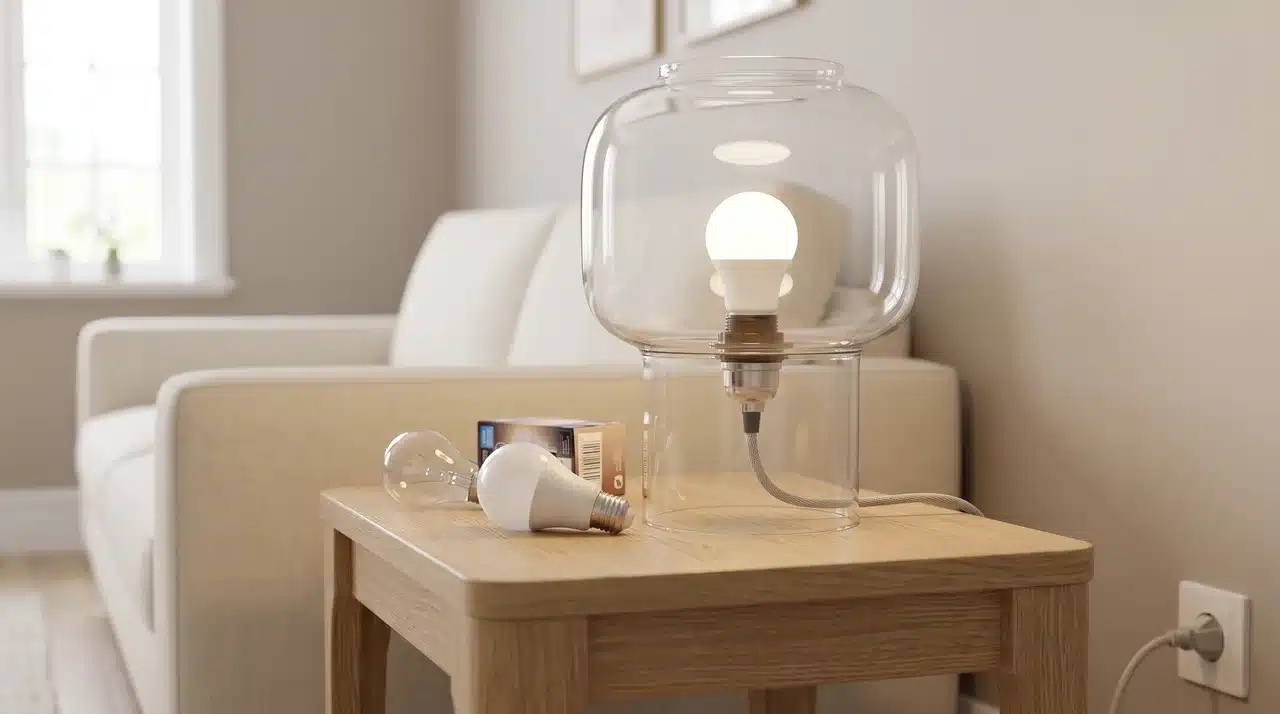





Buying a new bulb should be simple, but does wattage matter for light bulbs? I used to think the biggest number on the box was the only one that mattered, and you may have done the same.
That confusion often leads to buying the wrong bulb or worrying about damaging a light fixture. The good news is that the answer is much simpler once you know what each number actually means.
You will learn the difference between actual wattage and equivalent wattage, why fixture ratings matter, how wattage affects electricity use, and the quick checks that help you choose a safe, compatible bulb every time.
Why Fixture Wattage Ratings Exist and What Happens When You Ignore Them
Brightness is only one part of the bulb conversation, because wattage also controls how much heat builds up inside the socket and surrounding fixture, and every fixture rating represents a heat limit rather than an electricity cap.
Older fixtures were built around incandescent heat output, with materials chosen to handle exactly that thermal load.
That number printed near the socket tells you the highest safe light bulb wattage the fixture can handle without exposing its internal parts to excessive heat.
Ignoring the rating can overheat the socket, damage nearby wiring, shorten the bulb’s life, and increase the risk of melted insulation or an electrical fire.
This comparison shows where the real differences land across bulb types and fixture ratings.
| Bulb Type | Actual Wattage | Heat Output | Safe in 60W Rated Fixture |
|---|---|---|---|
| Incandescent | 60W | High | At the limit |
| Incandescent | 100W | Very High | No |
| LED | 10W | Very Low | Yes |
| LED | 20W | Low | Yes |
What this table doesn’t show is that a low-wattage LED can still overheat inside a sealed fitting, because the fixture rating alone doesn’t protect against that problem.
Does Wattage Also Affect Your Electricity Bill?
Heat and safety aren’t the only reasons wattage still matters; it’s also the number your electricity bill is quietly built on. Wattage measures energy draw, and that’s what you’re actually paying for every time a bulb is on.
An old 60W incandescent bulb running five hours a day draws roughly 300 watt-hours. Swap it for an 8-10W LED equivalent, and that same five hours costs a fraction as much, because you’re paying for the actual wattage, never the equivalent label on the box.
This is also why actual wattage and equivalent wattage need to stay separate in your head: equivalent wattage tells you nothing about the bill, and actual wattage tells you nothing about brightness. You need both numbers for two different reasons.
What Actually Happens When the Wattage Limit Is Exceeded
Exceeding a fixture’s wattage rating does not immediately trip a switch or blow a fuse. The damage happens gradually and invisibly until it becomes a serious problem.
Heat builds up around the socket and the wiring connections behind it. Over repeated use, that heat softens and degrades the plastic insulation coating the wires.
Once insulation breaks down, bare conductors can contact each other or surrounding materials, and that is where the fire risk becomes real and significant.
The Enclosed Fixture Problem: Where LED Wattage Ratings Break Down
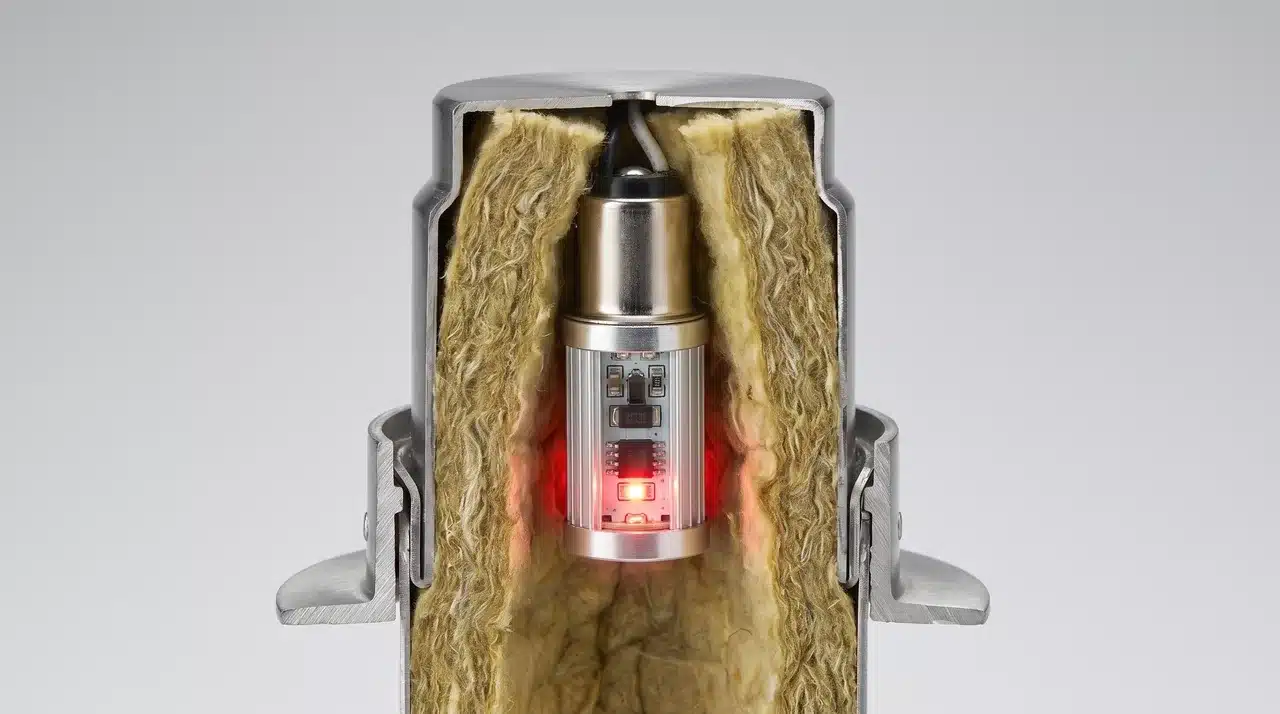
Many people assume that switching to a low-wattage LED automatically eliminates any heat problem inside a fixture. That assumption is only partially correct.
LED bulbs produce far less heat overall, but the heat they do generate concentrates in one specific place: the driver component sitting inside the bulb base. In an open fitting with airflow around it, that heat disperses without causing problems.
Here is what happens inside a sealed or recessed fitting when heat has no exit route:
- The driver component in the LED base generates heat during normal operation, and without airflow around it, that heat accumulates steadily with every hour of use.
- Once the temperature consistently exceeds the driver’s operating tolerance, internal components degrade faster than they are rated for, which is why LED bulbs in enclosed fixtures fail years earlier than expected.
- Bulbs without an enclosed fixture rating on their packaging were tested for open fittings only, meaning their thermal performance figures do not apply inside any sealed or recessed housing.
The fix is straightforward: check the bulb packaging for an enclosed fixture rating before installing it in any fitting that restricts airflow, since this quick ten-second step can prevent one of the most common causes of early LED failure at home.
What the Equivalent Wattage Label Actually Means and Why It Has No Safety Value
When you pick up a light bulb box and see “100W equivalent” printed on the front, that number doesn’t tell you how much electricity the bulb uses or how much heat it produces inside a fixture.
It is purely a brightness comparison tool, nothing more. Here is what that label actually does and does not tell you:
It matches brightness to a bulb you already know. The equivalent wattage label exists purely to help you replace an old incandescent with an LED that produces the same light output, giving you a familiar reference point during the buying decision.
It tells you nothing about actual power draw. A bulb labeled 100W equivalent typically draws between 14 and 20 actual watts, depending on the manufacturer and how efficient the LED chip inside actually is.
Two identical labels can hide very different wattages. Two bulbs sitting side by side with identical 100W equivalent claims can have meaningfully different actual wattages because one manufacturer built a more efficient driver than the other.
It creates the single most common buying mistake. Someone checks a 100W-equivalent LED against a 60W-rated fixture, concludes the numbers do not match, and puts a perfectly safe bulb back on the shelf based on a label with zero safety meaning.
The actual wattage of that rejected bulb was probably around 15 watts, sitting well within the fixture’s thermal limit. The equivalent label sent them in completely the wrong direction.
How to Check Wattage Correctly Before Installing Any Bulb
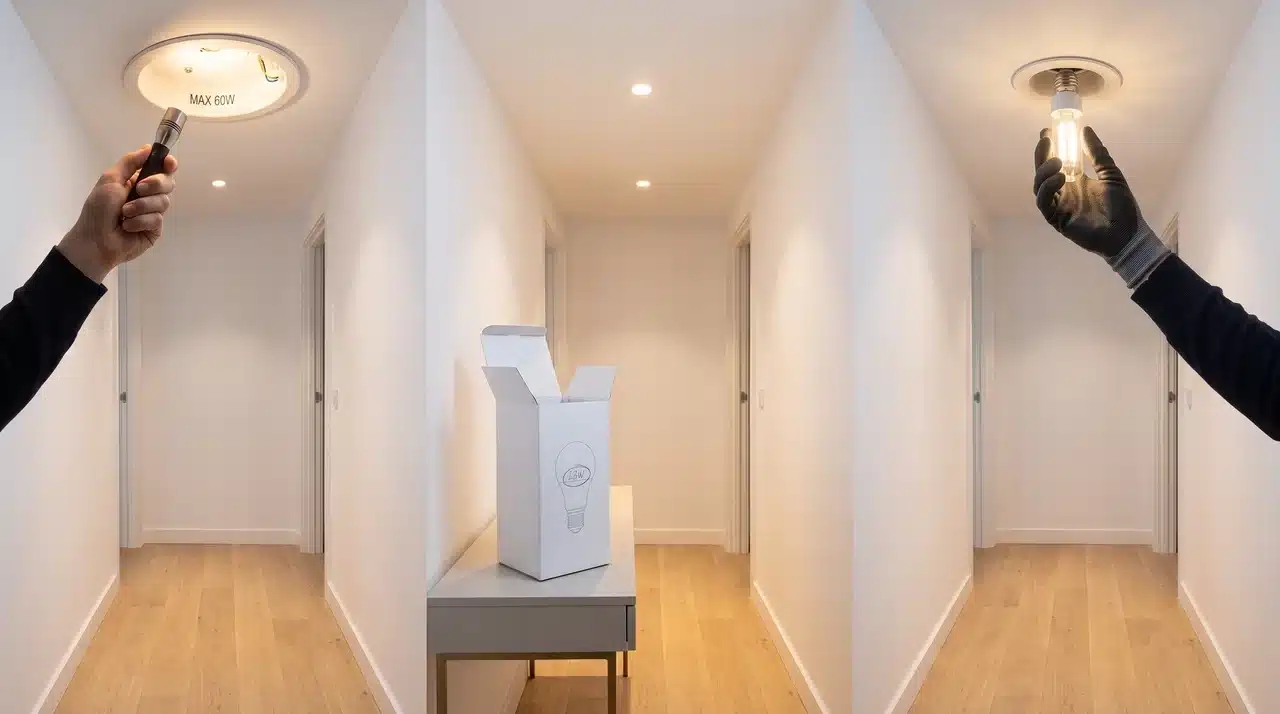
Every wattage mistake in that lighting aisle traces back to the same root cause: mixing up two numbers that live in different places on the box.
Lumens handle the brightness decision independently, while the wattage checks below cover the safety and compatibility side of the installation.
Here is a quick reference for what each number on bulb packaging actually tells you before you commit to an installation:
| Number on Packaging | What It Tells You | What It Does Not Tell You |
|---|---|---|
| Equivalent Wattage (e.g., 100W equivalent) | How bright the bulb is compared to an old incandescent bulb | Nothing about heat output or fixture safety |
| Actual Wattage (e.g. 14W) | How much electricity the bulb draws and how much heat it produces | How bright the bulb will be |
| Lumens (e.g., 1600 lm) | Exactly how much light comes out | Anything about energy draw or fixture compatibility |
| Enclosed Fixture Rating | Whether the bulb is safe in sealed or recessed fittings | General fixture wattage compatibility |
One additional situation worth flagging before the steps below: if the fitting connects to a dimmer switch, check that the bulb is labeled “dimmable” and rated for LED-compatible dimmers — pairing an LED with an old incandescent-only dimmer is what causes flickering, buzzing, or a bulb that won’t dim below 50%, regardless of what the wattage figures show.
A Three-Step Wattage Check for Any Fixture
Before installing any bulb, these three checks take under a minute and cover every wattage-related safety variable a fixture presents.
Step 1: Find the maximum wattage rating printed on the fixture itself, usually near the socket or inside the fitting cover. This is the thermal limit your bulb’s actual wattage must stay beneath before anything else is considered.
Step 2: Locate the actual wattage on the bulb packaging, which is always the smaller number sitting alongside the equivalent wattage claim. Confirm that this figure falls below the fixture’s maximum rating before proceeding with the buying decision.
Step 3: Check the packaging for an enclosed fixture rating if the fitting is recessed, sealed, or has no visible airflow gap around the bulb. A bulb without this rating should not be used in an enclosed fitting, regardless of its actual wattage.
Run these three checks in order every time, and the most avoidable wattage-related installation mistakes simply stop happening.
Conclusion
Choosing the right light bulb becomes much easier once you know which numbers deserve your attention.
Does wattage matter for light bulbs? Yes, but the actual wattage, fixture rating, lumens, and enclosed fixture compatibility each play a different role.
I hope you now feel more confident reading bulb packaging, avoiding common mistakes, protecting your fixtures, and keeping energy costs under control.
Taking a few seconds to check these details can prevent overheating, extend bulb life, and help you make smarter buying decisions.
If you found these tips useful, share your experience in the comments or explore more lighting and home improvement guides for practical advice.
Frequently Asked Questions
What happens if I put a 100W-equivalent LED in a 60W-rated fixture?
Check the actual wattage printed on the bulb packaging rather than the equivalent figure. A 100W-equivalent LED typically draws between 14 and 20 actual watts, which falls well within the thermal limit of a 60W-rated fixture. The equivalent label is a brightness reference only and carries no meaning for fixture safety or compatibility.
Can I put a higher-wattage LED in a lower-wattage lamp?
Only if the actual wattage of the LED stays below the fixture’s maximum rating. A bulb labeled 100W equivalent with an actual draw of 15 watts is perfectly safe in a fixture rated for 40W incandescent because the heat it produces sits well within the fixture’s thermal tolerance. Never use the equivalent figure for this check.
Why does my LED bulb keep burning out in a recessed fixture?
Recessed and enclosed fixtures trap heat around the LED driver in the bulb base, shortening lifespan even when the actual wattage is low. Check the bulb packaging for an enclosed fixture rating before installing. Bulbs without that rating are designed for open fittings with airflow and will degrade faster in any sealed or recessed housing.
Does wattage affect LED brightness?
With LED bulbs, wattage and brightness are not directly linked. Two LEDs at different wattages can produce identical lumen output if one uses a more efficient driver or chip. Lumens on the packaging is the only reliable brightness indicator for LEDs. Wattage tells you about energy draw and heat output, not how bright the bulb will actually be.