




I picked up an LED at the hardware store, checked the wattage on the box, compared it to my lamp, and still walked out completely unsure whether I had bought the right thing because nothing on the packaging behaved the way I expected.
For decades, wattage was the only number anyone needed to remember, and then LED bulbs arrived and quietly made that whole habit unreliable without anyone really explaining why.
Here I’ll walk through what light bulb wattage actually measures, how lumens measure brightness, and how to choose the right bulb for each fixture.
What Does Wattage Mean for Light Bulbs?
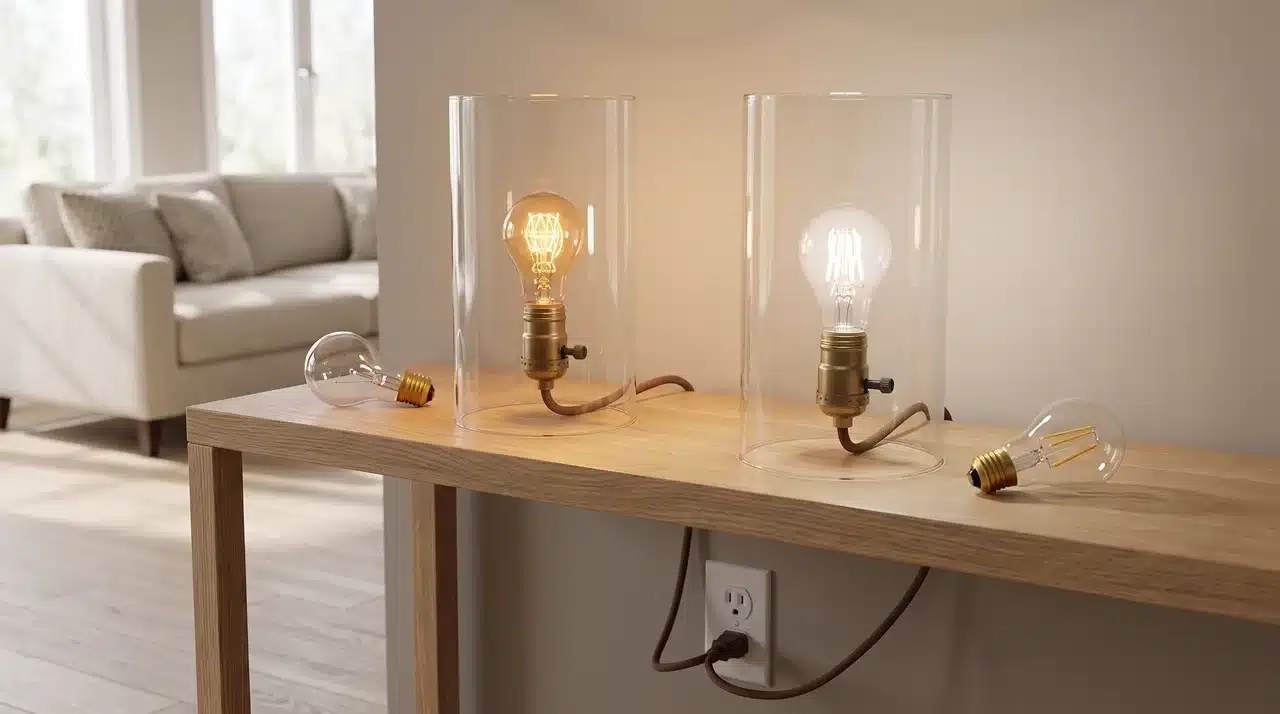
When you see “60W” on a light bulb box, it is easy to assume that the number tells you how bright the bulb will be. That was true for older incandescent bulbs, where higher wattage usually meant more light.
However, wattage does not measure brightness. It only shows how much electricity the bulb uses while running. Brightness is measured in lumens, so the lumen rating is the number to check when you want to know a bulb’s actual light output.
LED bulbs changed this relationship because they produce the same brightness while using much less power. For example, a modern LED can provide around 800 lumens while using only 9 watts. This is why wattage alone no longer tells you how bright a bulb will be.
How Watts and Lumens Relate: The Conversion You Need
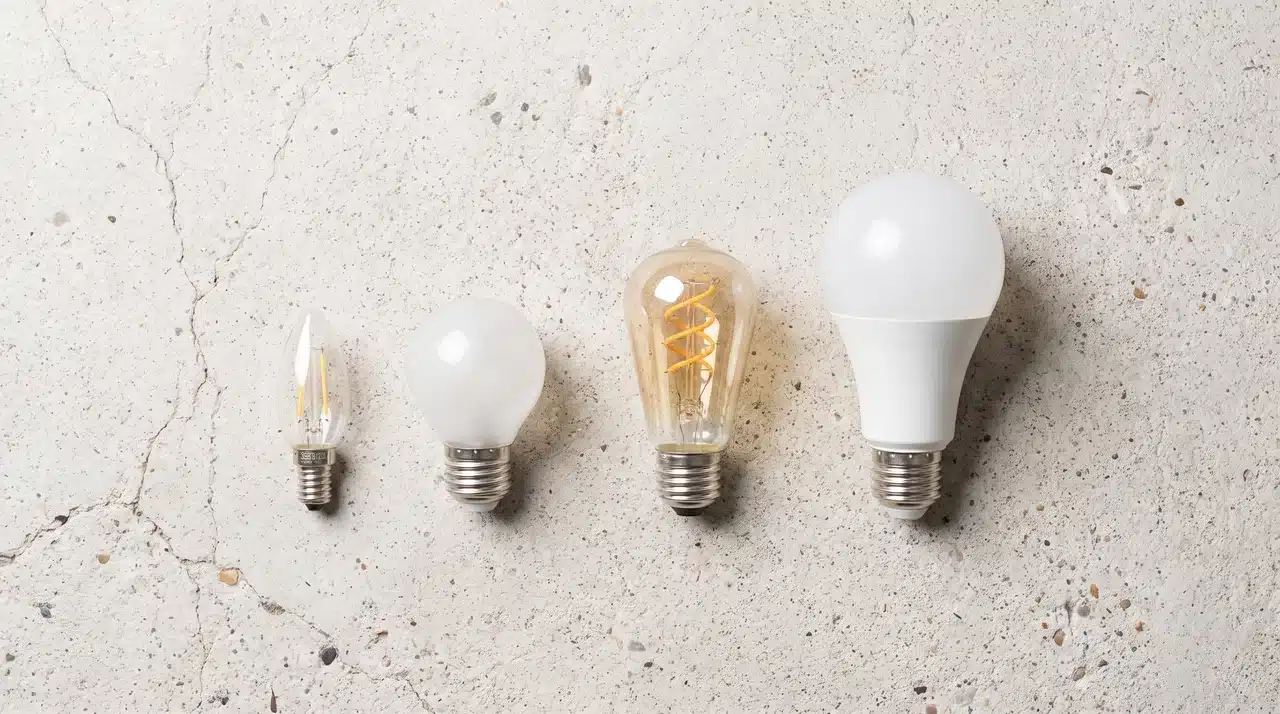
Understanding how wattage and lumens work together makes choosing the right bulb much easier. Here is how watts and lumens relate and why the old wattage shortcut no longer works.
- The wattage number on a light bulb box does not tell you how bright the bulb is. It only shows how much electricity the bulb uses while running.
- Lumens are the unit of measurement for brightness. The higher the lumen number, the more light the bulb produces.
- For decades, incandescent bulbs followed a simple pattern. A 40W bulb produced around 450 lumens, while a 60W bulb produced around 800 lumens.
- Because older bulbs worked this way, people started using wattage as a quick way to judge brightness instead of checking lumens.
- LED bulbs changed this relationship by producing the same brightness while using much less electricity.
- A modern LED can produce around 800 lumens while using only 9 watts, making wattage alone an unreliable metric for comparing bulb brightness.
Understanding the difference between watts and lumens helps you choose bulbs based on actual brightness and energy use instead of outdated wattage assumptions.
The Standard Conversion Table
This table shows exactly how incandescent wattage translates to LED wattage and lumens, so you can replace any old bulb with the right modern equivalent without second-guessing the numbers.
| Incandescent Watts | LED Watts | Brightness in Lumens | Good For |
|---|---|---|---|
| 40W | 6 to 9W | 450 lumens | Nightlights, accent lamps |
| 60W | 9 to 12W | 800 lumens | Bedrooms, reading lamps |
| 75W | 12 to 15W | 1,100 lumens | Kitchens, home offices |
| 100W | 16 to 20W | 1,600 lumens | Garages, task lighting |
Knowing a bulb’s wattage gives you a useful starting point, but understandinghow much electricity your lights use also depends on bulb efficiency, daily operating time, and the number of fixtures across your home.
The LED wattage column often shows a range because a 60W-equivalent bulb may draw 9 watts from one brand and 11 watts from another, even when both produce similar brightness.
That difference comes from the way manufacturers design their LED chips, drivers, and internal components, which means two bulbs with the same equivalent label may not use energy equally.
For a fair comparison, check the lumen rating and actual wattage on the package rather than assuming every bulb marked “60W equivalent” delivers the same performance.
Fixture Wattage Ratings: What the Number on Your Lamp Actually Limits
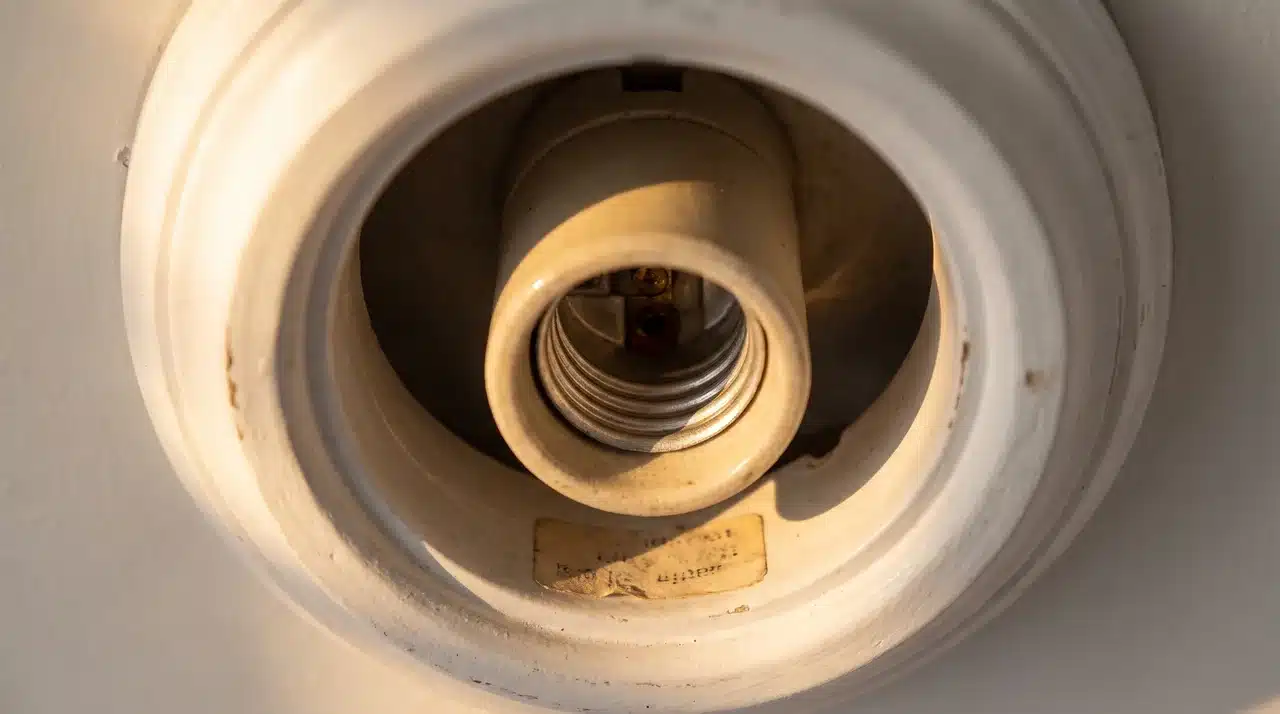
Every lamp and light fixture has a maximum wattage rating printed near the socket, inside the shade, or on a small safety label.
That number does not describe brightness or estimated running cost, because it shows how much heat the fixture’s socket, wiring, and surrounding materials can safely tolerate.
Traditional incandescent bulbs released most of their electricity as heat, which meant a 60W bulb acted almost like a small heater while producing light.
Fixtures were designed around that heat output, so exceeding the printed rating could damage the socket, weaken the wiring insulation, or overheat nearby materials.
Understanding why wattage matters for light bulbs becomes easier when you treat the fixture rating as a heat limit rather than a brightness recommendation.
Here is how the rating applies when choosing a replacement bulb:
-
A fixture rated for 60W was designed to handle the heat produced by an incandescent bulb drawing no more than 60 watts.
-
A 9W to 12W LED can usually provide similar brightness while drawing much less electricity and releasing far less heat into the fixture.
-
A bulb should never exceed the fixture’s maximum wattage rating, even when its shape, base, and brightness appear suitable for the fitting.
-
LEDs used inside covered or enclosed fixtures should also carry an enclosed-fixture rating, because restricted airflow can trap heat around their internal components.
LEDs use less power for the same brightness, but fixture wattage limits still protect safety. Check lumens for brightness, wattage for energy use, and fixture compatibility before buying.
How Many Lumens Does Each Room Need?
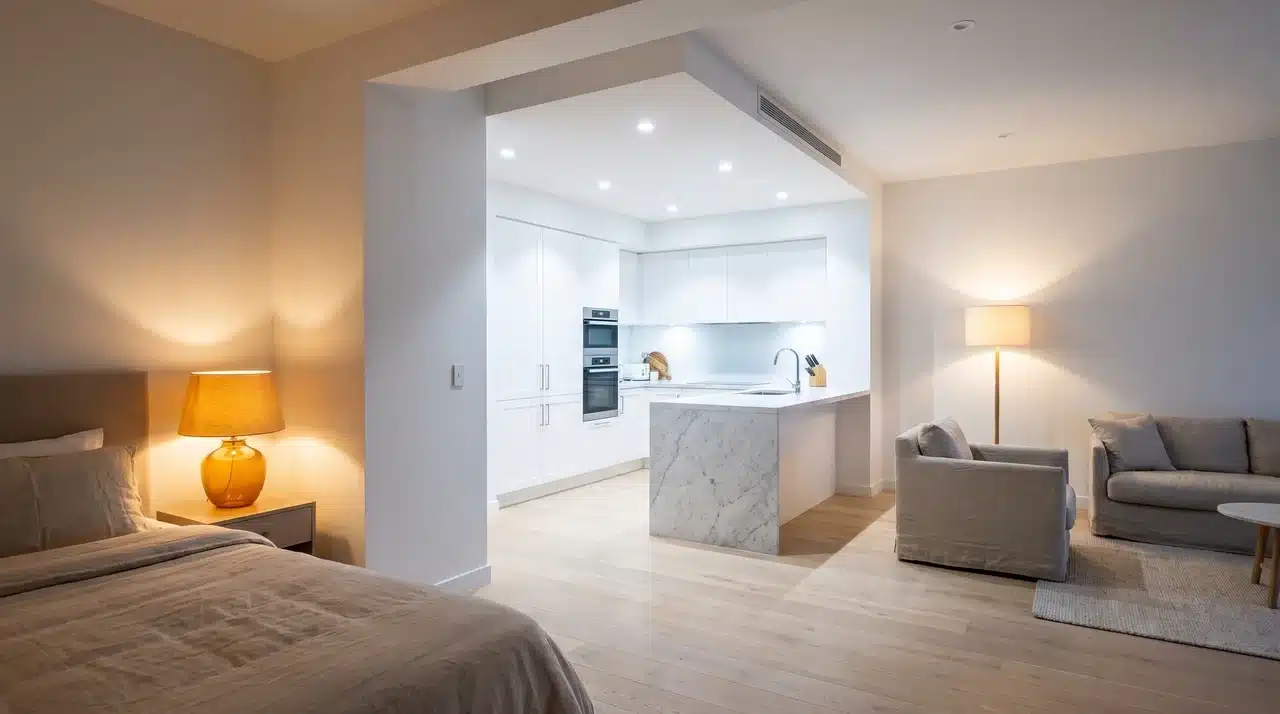
Picking the right bulb is not really about wattage anymore. It’s about matching the brightness of a room to its actual use.
A bedroom needs soft, low-key light that helps you wind down. A kitchen needs bright, clear light so you can actually see what you are chopping. The activity drives the lumen number, not personal preference.
Here is a simple breakdown by room:
| Room | Recommended Lumens | LED Wattage Equivalent | Why This Level |
|---|---|---|---|
| Bedroom | 1,000 to 2,000 lumens | 10 to 20W | Relaxation needs softer, lower-intensity light |
| Living Room | 1,500 to 3,000 lumens | 15 to 30W | Mixed-use needs flexible brightness levels |
| Kitchen | 3,000 to 4,000 lumens | 30 to 40W | Task areas need strong, clear visibility |
| Home Office | 3,000 to 3,500 lumens | 30 to 35W | Focused work reduces eye strain at higher lumens |
| Bathroom | 2,000 to 3,000 lumens | 20 to 30W | Grooming tasks need bright, even coverage |
| Garage | 3,000 to 6,000 lumens | 30 to 60W | A large space with task work needs high output |
| Hallway | 500 to 1,000 lumens | 5 to 10W | Passage areas need just enough to navigate safely |
One thing the lumen number alone cannot tell you is how many bulbs a room needs. A single 2,000-lumen bulb in the center of a large living room will still leave corners dim.
Layering two or three lower lumen sources across the room almost always produces better, more even light than one powerful bulb trying to cover everything from a single point.
One more number worth checking on the box: color temperature, measured in Kelvin. Two bulbs with identical lumens can feel completely different; a 2700K bulb reads warm and soft, while the same lumen count at 4000K feels crisp and closer to daylight. Lumens tell you how much light you’re getting; Kelvin tells you what that light feels like.
Conclusion
You came here confused about light bulb wattage, and now you understand that wattage measures electricity consumption rather than brightness, that lumens are the number that actually tells you how much light a bulb produces, and that your fixture rating exists to protect against heat rather than guide your brightness decision.
That confusion you felt standing in the lighting aisle makes complete sense now, because the labels on bulb packaging were designed around incandescent logic that LED bulbs quietly made obsolete without anyone updating the instructions.
Next time you are replacing a bulb, check the lumens first, match the actual wattage to your fixture rating, and if this helped you finally make sense of it all, explore more such blogs where everything around the home gets the same straightforward treatment.
Frequently Asked Questions
Should I use a 40W or 60W bulb?
The answer depends on what the room is used for, not which wattage sounds brighter. A 40W incandescent bulb produces around 450 lumens, which is well-suited for accent lighting and nightlights. A 60W incandescent bulb produces around 800 lumens, which is suitable for bedrooms and reading lamps. With LEDs, check the lumens on the package and match them to the room’s activity instead of picking by wattage.
What wattage light bulb do I need for my fixture?
Check the maximum wattage rating printed on the fixture itself, usually near the socket. With LED bulbs, you can safely use any bulb with a wattage below that limit. A fixture rated for 60W incandescent can comfortably run a 9W to 12W LED that produces the same brightness, because the heat output stays well within the fixture’s safe range.
What is equivalent to a 60W light bulb?
A 60W incandescent bulb produces roughly 800 lumens. Any LED bulb labeled as producing 800 lumens is the functional equivalent, regardless of what wattage it consumes. Most 60W-equivalent LEDs on shelves today use between 9 and 12 watts, but the lumen count on the package is the figure to confirm before you buy.
Why does my LED bulb fail faster than expected?
Heat is the leading cause of early LED failure. In enclosed fixtures without ventilation, heat builds up around the internal components of the bulb and shortens its lifespan considerably. Check the bulb’s packaging for an enclosed fixture rating before installing it anywhere that restricts airflow around the bulb.