
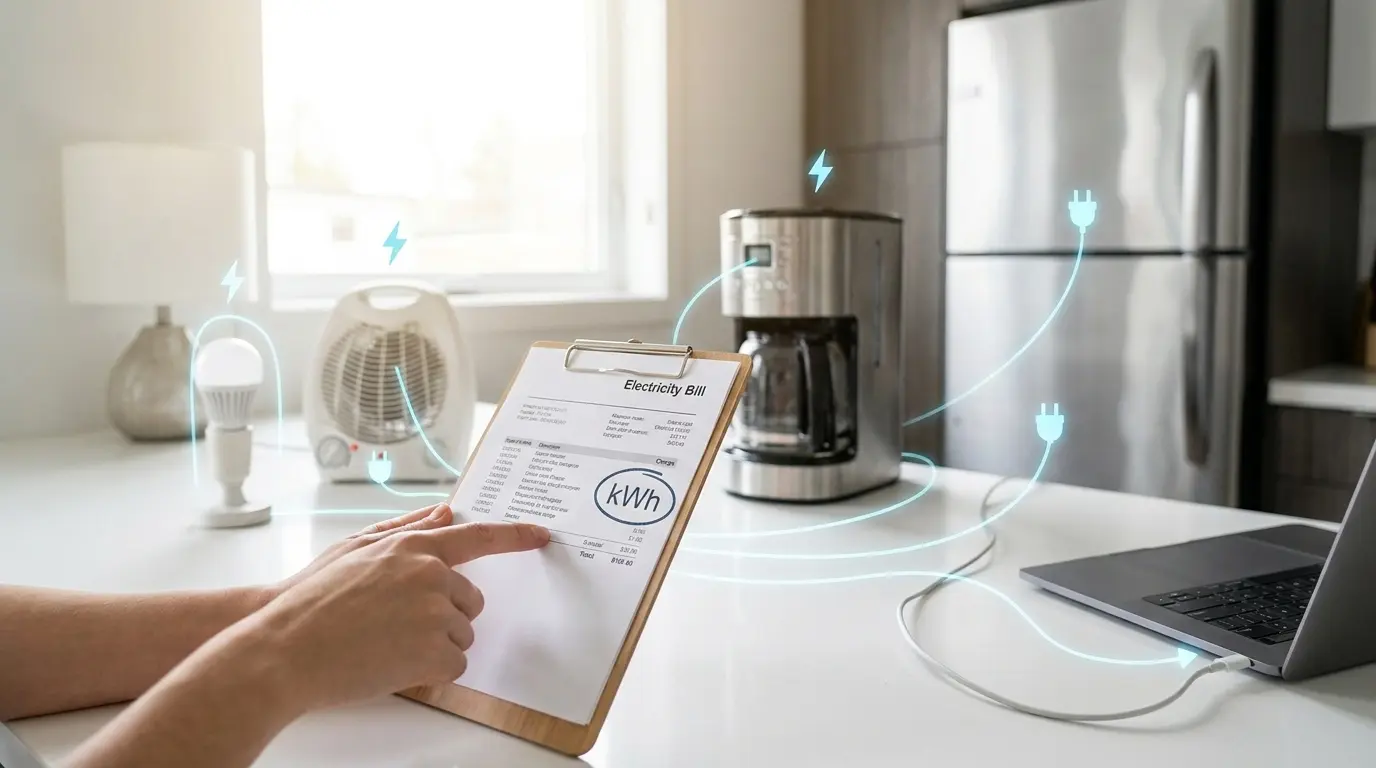


Electricity bills can make a simple number like kWh feel more confusing than it should.
If you are trying to understand where your energy use comes from, the term can quickly get in the way. So, what is a kilowatt hour, and why does it matter?
I think the easiest way to understand it is through everyday examples. You can see how kWh measures energy, how it differs from kW, and how appliance wattage and running time affect usage.
I also explain how to calculate kWh, read it on an electricity bill, and estimate basic energy costs. That gives you a practical way to make sense of the numbers you see each month.
What Is a Kilowatt-Hour?
A kilowatt-hour is a unit used to measure electrical energy. One kilowatt equals 1,000 watts, so one kilowatt-hour represents 1,000 watts of power used for one hour.
The basic relationship looks like this: 1 kWh = 1 kW × 1 hour
For example, a 1,000-watt electric heater running cost for one hour consumes 1 kWh of electricity.
Running time can change while the total energy use stays the same. A 500-watt appliance running for two hours also consumes 1 kWh.
Electricity providers use kWh because it records total energy use rather than only showing how powerful an appliance is at a given moment.
What Is the Difference Between kW and kWh?
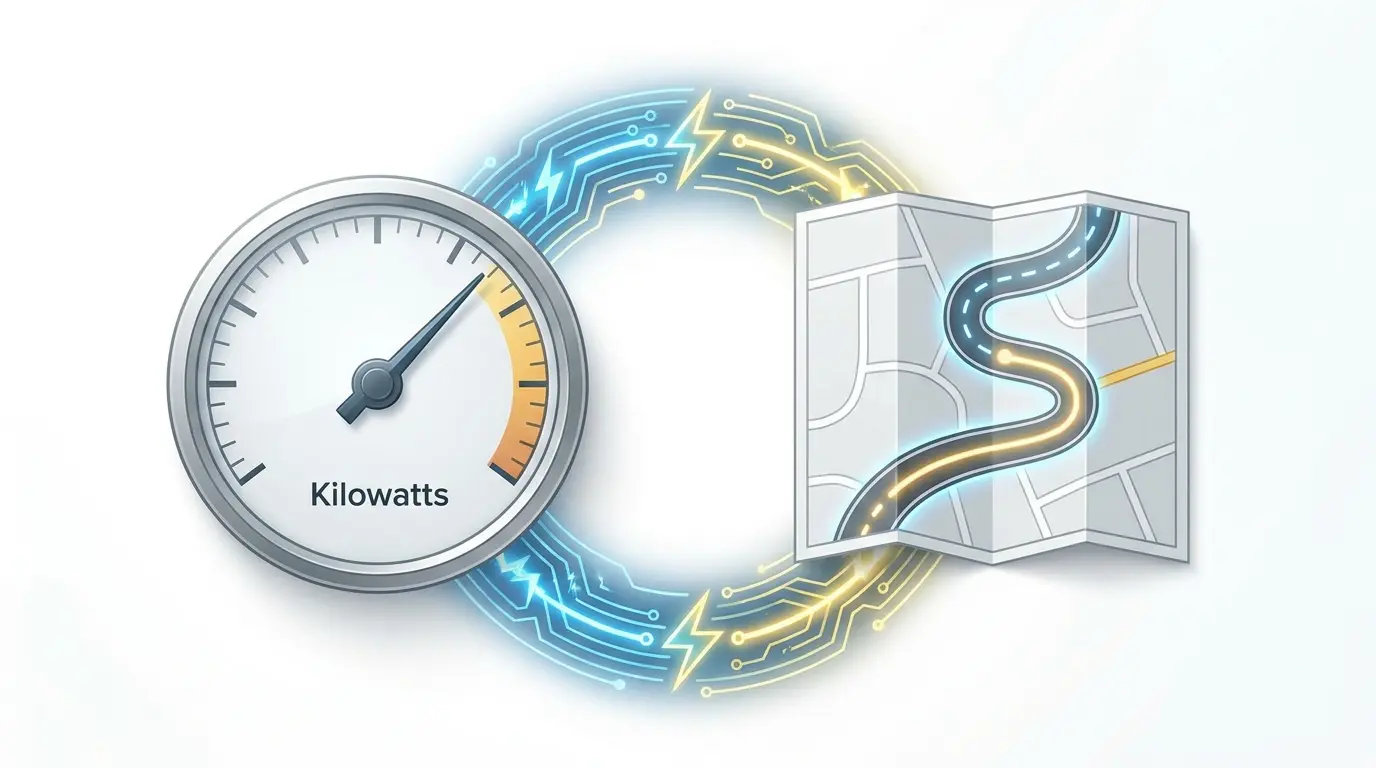
Kilowatts and kilowatt-hours sound similar, but they measure different things. A kilowatt (kW) measures power, while a kilowatt-hour (kWh) measures energy used over time.
The table below shows the difference more clearly.
| Measurement | What It Measures | Simple Meaning | Example |
|---|---|---|---|
| kW | Power | How fast electricity is being used | A heater rated at 2 kW |
| kWh | Energy | Total electricity consumed | A 2 kW heater running for 30 minutes uses 1 kWh |
A higher kW rating means an appliance can use electricity at a faster rate. The final kWh figure depends on both that power rating and how long the appliance operates.
This distinction matters when comparing appliances. Two devices may have very different wattages but still consume the same total energy if their running times are different.
How Much Electricity Is 1 kWh?
One kWh can be used quickly by a powerful appliance or slowly by a low-power device. The amount of energy stays the same; only the time needed to consume it changes.
Here are several simple examples.
| Appliance Power | Time Needed to Use 1 kWh |
|---|---|
| 2,000 watts | 30 minutes |
| 1,000 watts | 1 hour |
| 500 watts | 2 hours |
| 100 watts | 10 hours |
| 10 watts | 100 hours |
A 2,000-watt appliance reaches 1 kWh much faster than a 10-watt light because it draws far more power while running.
This is why wattage alone does not tell the full story about energy use. A low-watt device left on for many hours can sometimes consume more electricity than a high-watt device used for only a few minutes, which is often how the biggest energy consumers in a home end up surprising people.
How Do You Calculate Kilowatt-Hours?
Calculating kWh requires two pieces of information: the appliance’s power rating and the amount of time it operates.
The standard formula is: kWh = watts × hours ÷ 1,000
If the appliance rating is already listed in kilowatts, the calculation is even shorter: kWh = kilowatts × hours
Kilowatt-Hour Calculation Example
Suppose a space heater has a power rating of 1,500 watts and runs for two hours.
Start by multiplying the wattage by the running time: 1,500 watts × 2 hours = 3,000 watt-hours
Then divide by 1,000: 3,000 ÷ 1,000 = 3 kWh
The heater therefore uses 3 kWh during those two hours.
I use the same calculation for items such as fans, air conditioners, televisions, ovens, and other electrical equipment when estimating energy use.
How Does kWh Appear on an Electricity Bill?
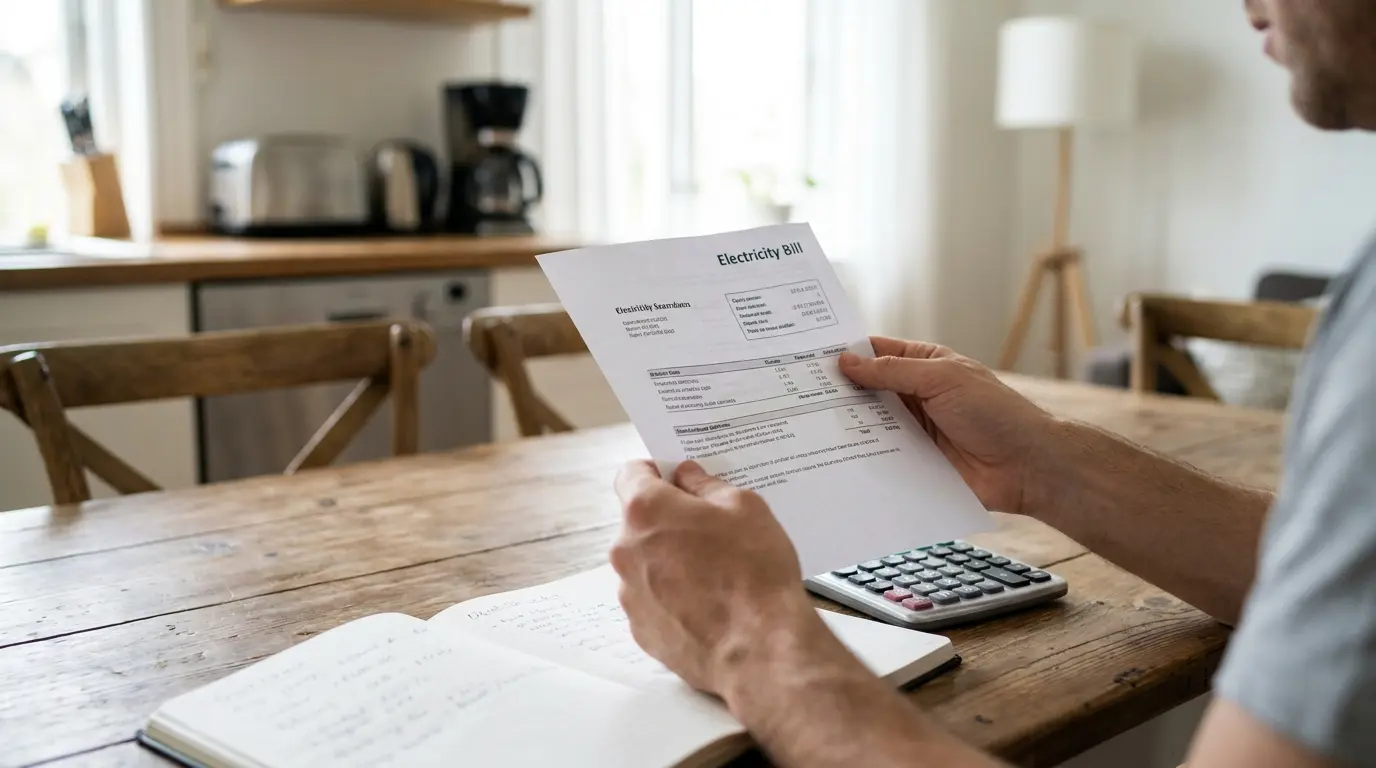
An electricity meter records how much electrical energy is used during a billing period. That usage normally appears on the bill in kilowatt-hours.
For example, if a meter reading shows that a property used 700 kWh during one billing cycle, the energy charge is usually based partly on those 700 units.
A basic cost calculation looks like this: Electricity cost = kWh used × electricity rate per kWh
The final bill may contain other charges as well. These can include service fees, taxes, delivery costs, demand charges, or different rates based on the time electricity was used.
For that reason, multiplying total kWh by the listed energy rate gives a useful estimate, but it may not match the full amount due on the bill.
How Much Does 1 kWh Cost?
There is no single price for one kilowatt-hour. Electricity rates vary by location, energy provider, rate plan, season, and sometimes the time of day.
For example, assume an electricity plan charges $0.15 per kWh. Using 10 kWh would result in an energy charge of:
10 kWh × $0.15 = $1.50
That figure is only an example. Actual rates may be higher or lower.
The most reliable place to find the correct price is the electricity bill or utility account. Some plans also use tiered pricing, where the rate changes after a certain amount of electricity has been consumed.
Checking the exact rate makes appliance running-cost estimates much more useful.
How Many Joules Are in a Kilowatt-Hour?
Kilowatt-hours and joules both measure energy, but they are used in different settings.
One kilowatt-hour equals: 1 kWh = 3,600,000 joules
It can also be written as: 1 kWh = 3.6 megajoules
The conversion comes from the relationship between watts and joules.
One watt equals one joule per second. A kilowatt equals 1,000 watts, and one hour contains 3,600 seconds.
Multiplying those figures gives: 1,000 × 3,600 = 3,600,000 joules
Joules are common in science and engineering, while kWh is more practical for household electricity use because everyday energy consumption would require very large numbers if shown only in joules.
Is a Kilowatt-Hour the Same as 1,000 Watts?
No. A kilowatt-hour and 1,000 watts measure different things. Watts measure power. Kilowatt-hours measure energy. A device drawing 1,000 watts does not automatically use 1 kWh. Time must also be included.
For example:
- A 1,000-watt appliance running for one hour uses 1 kWh.
- A 1,000-watt appliance running for 30 minutes uses 0.5 kWh.
- A 1,000-watt appliance running for two hours uses 2 kWh.
For the same reason, a kWh cannot be converted directly into watts unless the operating time is known.
This difference is important when reading appliance labels. The wattage printed on a product describes its power demand, not its total energy consumption.
Why Kilowatt-Hours Matter for Everyday Energy Use
Kilowatt-hours make it easier to compare how much electricity different devices use over time.
An air conditioner may have a high power rating but run only part of the day. A refrigerator usually draws less power at one moment but operates in cycles throughout the day. Looking at kWh provides a better way to compare their total energy use.
The same measurement is also useful for:
- Checking monthly electricity consumption
- Estimating appliance running costs
- Comparing energy-efficient appliances
- Reviewing solar panel production
- Understanding battery capacity
- Tracking electric vehicle charging
Knowing the kWh figure gives useful context that a wattage rating alone cannot provide.
Common Kilowatt-Hour Mistakes
Several small misunderstandings can make electricity calculations confusing. These are some of the most common ones.
- Mixing Up kW: Kilowatts measure power, while kilowatt-hours measure the amount of energy used over time.
- Writing kW/h: A standard kilowatt-hour is written as kWh. kW/h describes a different type of measurement involving a change in power over time.
- Ignoring Running Time: Wattage does not show total energy use unless the operating time is also known.
- Using One Electricity Price: Electricity rates differ between providers, locations, plans, and billing periods.
- Comparing Wattage Alone: A device with lower wattage can still consume more energy if it runs for much longer.
Keeping power, time, and total energy separate makes kWh calculations easier to check.
Kilowatt-Hour Example at a Glance
Consider a 2 kW electric heater running for three hours.
Its energy use is calculated as: 2 kW × 3 hours = 6 kWh
Now assume an example electricity rate of $0.15 per kWh.
The estimated energy charge would be: 6 kWh × $0.15 = $0.90
The heater’s 2 kW rating tells us how much power it draws while operating. The 6 kWh figure tells us how much energy it consumed across the full three hours.
That same approach works for nearly any electrical appliance when its power rating and operating time are known.
Final Thoughts
A kilowatt-hour becomes much easier to understand once power and energy are kept separate.
You can use kW to see how much power an appliance draws, while kWh shows the energy it uses over time. That difference also makes electricity bills, appliance labels, and running-cost estimates easier to read.
If you still wonder what is a kilowatt hour, remember the basic idea: power multiplied by time gives energy use. I find that formula useful for checking everyday appliances and comparing how long they run.
You can also use it to spot where more electricity may be going each month. Try the calculation with one appliance at home, then check related energy tips for practical help.
Frequently Asked Questions
Is 40 kWh per day a lot?
It depends on property size, climate, heating and cooling equipment, appliance use, and EV charging. Comparing 40 kWh with past bills or similar seasonal usage gives better context than using one fixed benchmark.
What appliances usually use the most electricity?
Heating systems, air conditioners, electric water heaters, clothes dryers, ovens, pool equipment, and EV chargers can account for significant electricity use because of their power demand or long operating times.
Why does electricity use change from month to month?
Weather, longer heating or cooling periods, appliance use, holidays, guests, and changes in daily routines can all affect monthly kWh consumption.
Can a smart meter show kWh usage?
Yes. Smart meters record electricity consumption and can often provide more detailed usage data through the utility account, including daily or hourly energy use.
Does turning an appliance off always stop electricity use?
Not always. Some electronics continue drawing a small amount of standby power when plugged in. Smart TVs, game consoles, chargers, and other devices may consume electricity even when they appear inactive.