

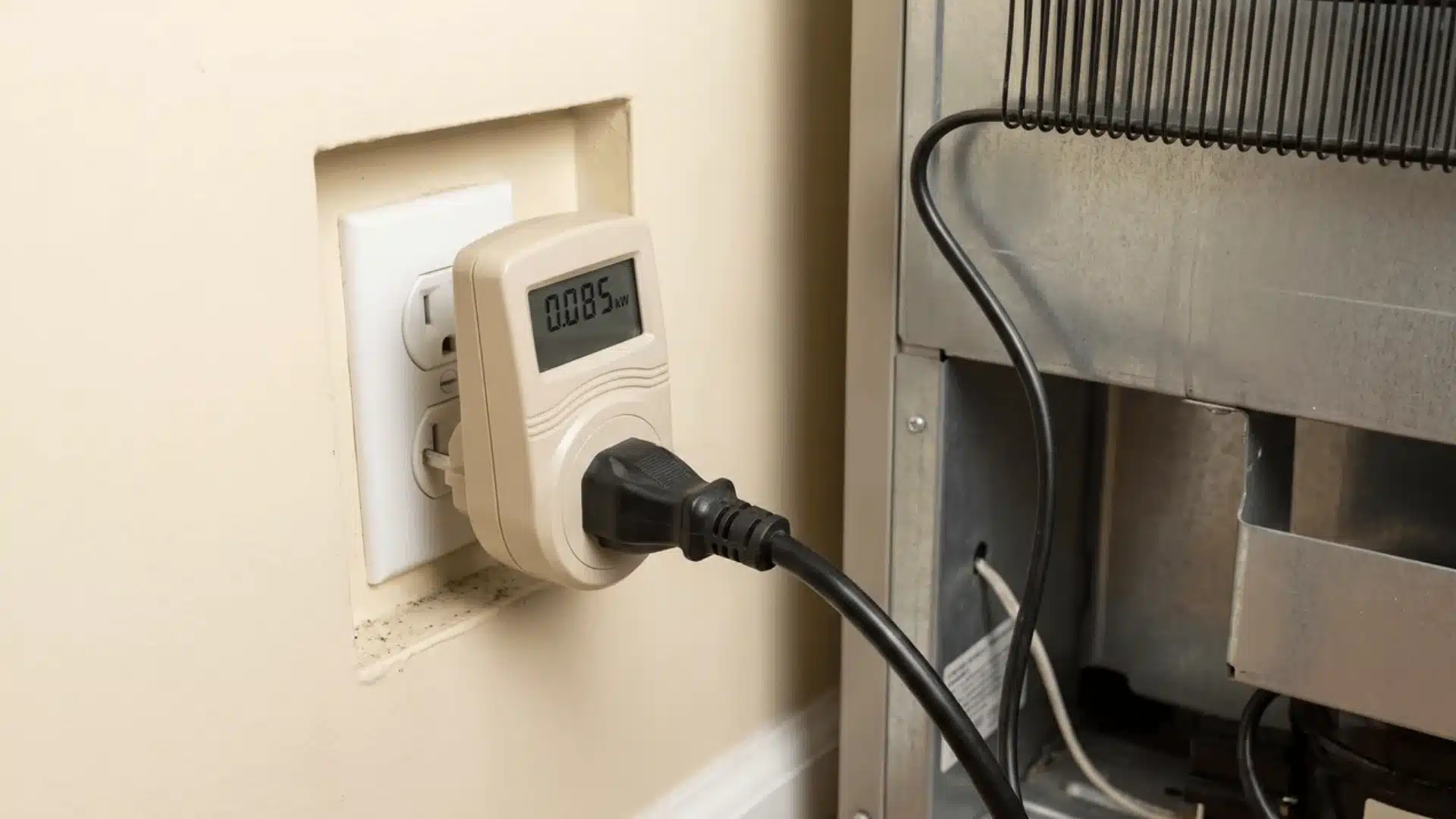
Your solar panels may keep producing power for decades, but the inverter working behind the scenes has a shorter journey. When it starts losing performance, your entire system can generate less electricity without an obvious warning.
I know it can be frustrating to invest in solar and not know when a major component might need attention.
Understanding how long do solar inverters last helps you plan for maintenance, replacements, and long-term costs.
This guide explains how different inverter types age, what factors affect their lifespan, and the signs that tell you it may be time for a replacement before a small issue becomes a bigger problem.
How Long Do Solar Inverters Last?
Solar inverters don’t all age the same way. The number you’ll see quoted most often is 10 to 15 years, but that figure only tells part of the story.
The type of inverter on your roof significantly affects that number.
- String inverters land in the 10- to 15-year range.
- Microinverters reach 20 to 25 years.
- Hybrid inverters sit closer to string inverters at 10 to 15 years.
That gap between string and microinverter lifespan isn’t a fluke. It comes down to how much electrical stress each type carries every single day. That’s worth understanding before you accept any single number as your own.
What every homeowner will likely face is this: your panels are built to last 25 to 30 years, while solar panel lifespan still outpaces nearly every other part of the system. Your inverter almost certainly won’t keep pace. A string inverter owner should plan for at least one full replacement. A microinverter owner might never need one at all.
The right question isn’t just how long inverters last on average. It’s why your specific type ages the way it does, and what you can do about it.
Why Do String Inverters Fail Faster Than Microinverters?
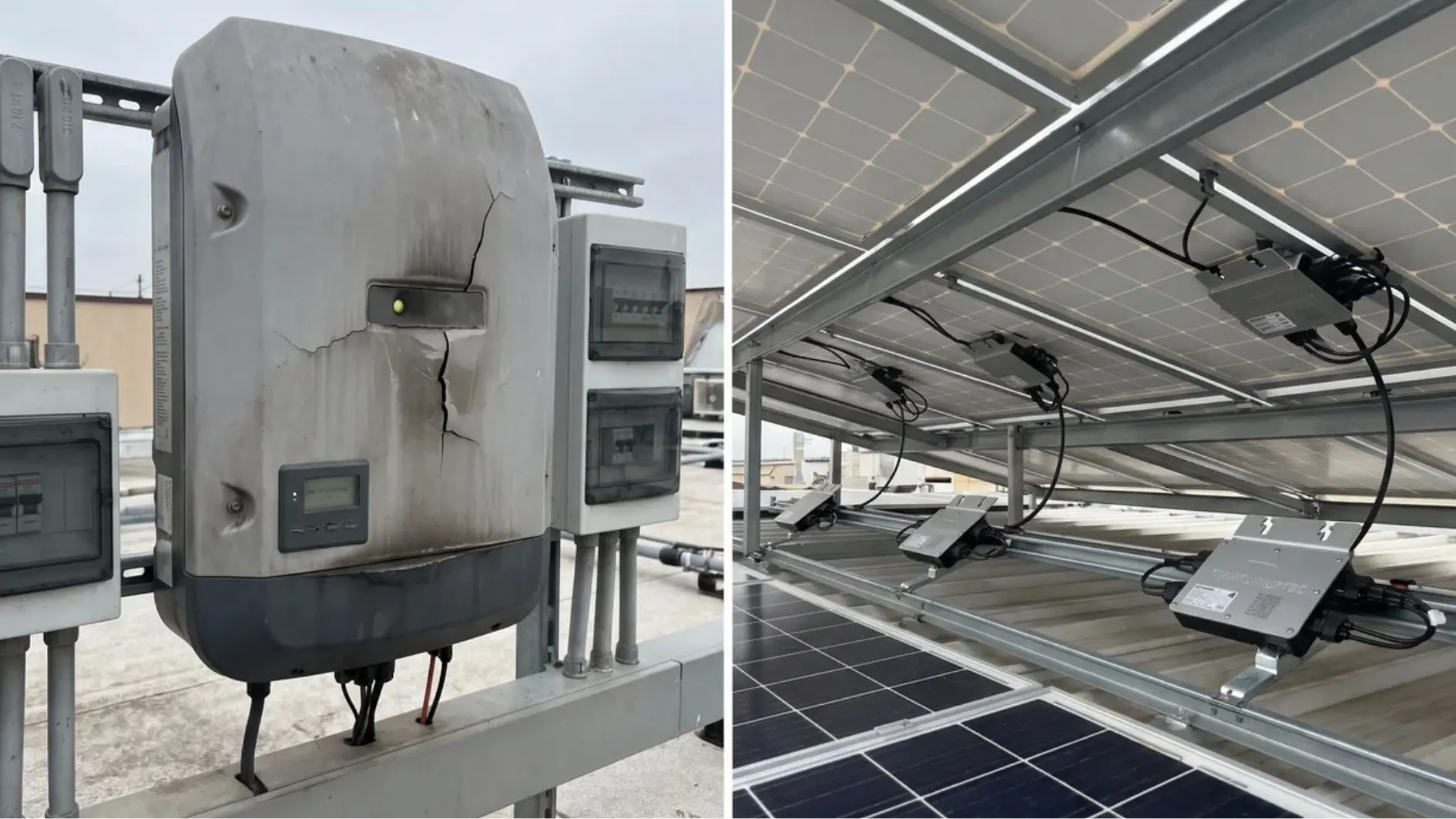
The lifespan gap between string and microinverters comes down to one thing: how much electrical load each unit carries every single day.
How a String Inverter Wears Down
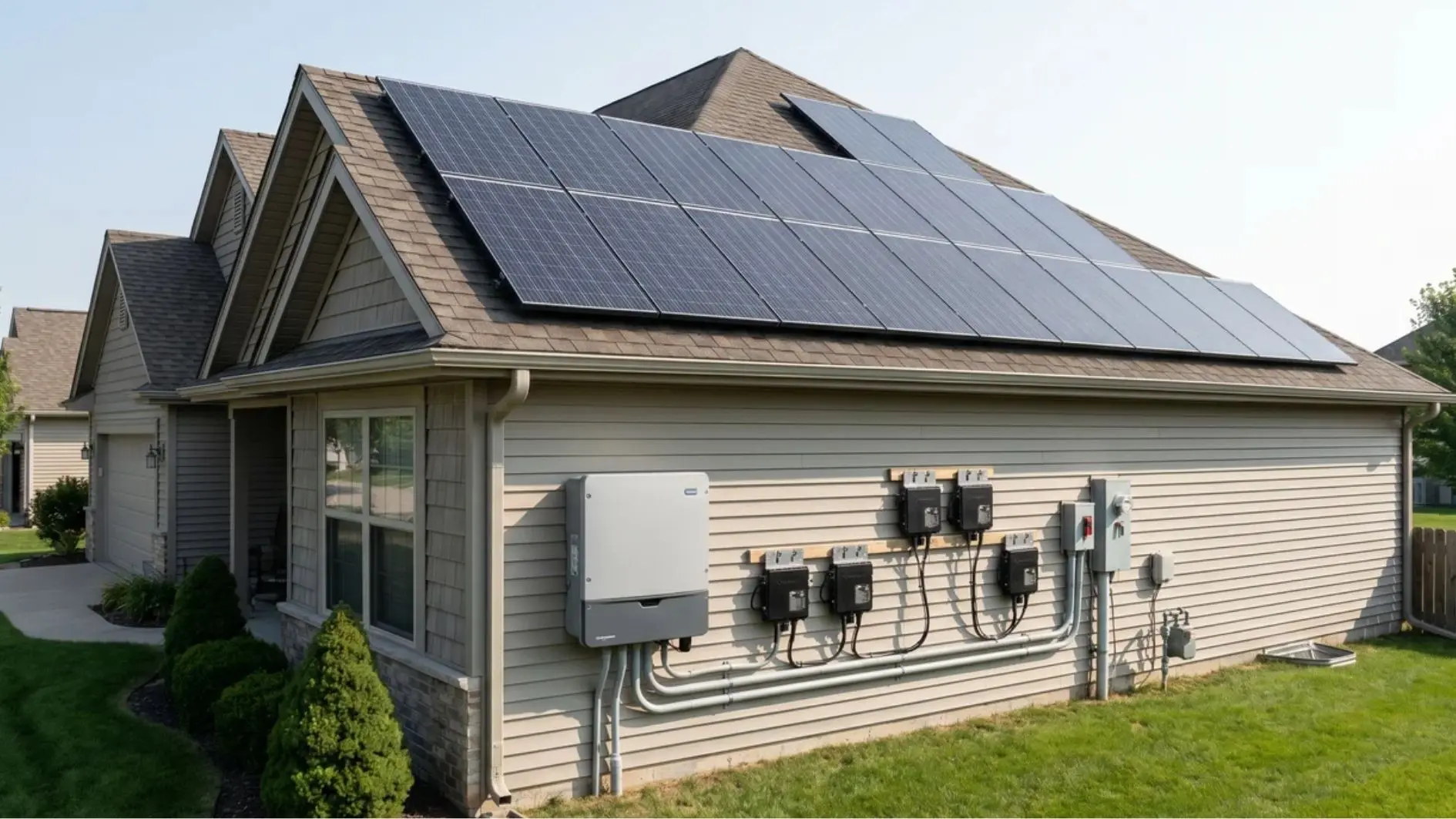
A string inverter handles the full output of your entire solar array. Every panel feeds into a centralized unit that continuously processes high voltage, all day long.
That sustained load generates heat internally. Heat is what degrades the components inside fastest, specifically the electrolytic capacitors that regulate voltage and smooth out current flow.
Once capacitor performance drops below a functional threshold, the inverter starts throwing faults. Eventually, it fails. That is the actual failure story behind the 10 to 15-year figure.
Why Microinverters Age Differently
Microinverters work differently at a structural level. Each unit sits behind a single panel and processes only that panel’s output.
The voltage is lower. The internal heat generated is lower. The stress on components stays lower across the unit’s entire operating life.
That is why the lifespan gap is real and consistent. It is not about brand quality. It is a direct result of how much load each inverter type was designed to carry.
Where Installation Makes It Worse
Environmental heat compounds the problem for string inverters specifically. A unit mounted in a hot garage or in direct sun starts every day at a higher baseline temperature.
That added ambient heat accelerates capacitor degradation on top of the load-driven heat already building inside. The same string inverter in a cool, shaded utility room can outlast a poorly placed one by three to five years.
What Actually Determines How Long Your Inverter Lasts?
Type is the starting point, but it is not the whole answer. Where your inverter lives and how it is treated from day one shapes how close it gets to its expected lifespan.
Three variables move the needle more than anything else: heat exposure, moisture, and whether anyone is actually watching the system.
Heat and Ventilation
Inverters generate heat as a byproduct of converting DC to AC power. That part is unavoidable. What is avoidable is trapping that heat through a bad installation choice.
An inverter in a sealed enclosure or unventilated garage runs hotter than it should every single day. Over years, that compounds internal stress on the exact components most likely to fail first.
A shaded, well-ventilated location is not a luxury. It is one of the highest-leverage decisions made at install time, and it is nearly impossible to fix cheaply after the fact.
Moisture and Climate
Moisture does not need to flood a unit to cause damage. Sustained humidity corrodes circuit board connections gradually, and coastal or high-humidity climates make this worse at a pace most homeowners never see coming.
The fix happens at installation: proper sealing, a location that limits condensation, and awareness that a perfectly functioning inverter in Arizona ages differently than the same unit in coastal Florida.
Monitoring
Most inverters will signal a problem before they fail outright. A persistent output drop that does not clear after a reboot, or a repeating fault code, is the system telling you something is wrong.
Checking daily generation occasionally takes almost no time. Catching a fault early is often the difference between a repair call and a full replacement.
When Should You Actually Replace a Solar Inverter?
The 10- to 15-year figure makes replacement sound like a scheduled event. It is not. Age alone is not a reason to replace a functioning inverter.
The real trigger is confirmed output loss. If your system generates noticeably less power and the problem persists after a reboot, the inverter is the next thing to investigate. A fault code classified as a terminal hardware failure is the clearest signal of all.
A 12-year-old inverter showing steady output and no fault codes does not need replacing. Replacing it on schedule is a real and common cost mistake that catches more homeowners than it should.
The decision gets more layered when multiple things align. If your inverter needs replacing and your panels have degraded meaningfully over the same period, that intersection is worth pausing on before you just swap the inverter out.
Running a new inverter against panels at 75-80% output is a legitimate choice. But it is also the moment to ask whether a full system evaluation makes more financial sense than replacing components one at a time.
Conclusion
A solar inverter plays a critical role in keeping your system running, but it usually will not last as long as your panels.
I’ve covered how inverter types, heat, moisture, installation choices, and monitoring habits influence performance over time.
Knowing how long do solar inverters last helps you prepare for future expenses and avoid replacing a working unit too early.
You can extend inverter life by choosing the right installation location, keeping an eye on system output, and addressing warning signs quickly. Age gives you a useful estimate, but actual performance should guide your decisions.
Review your system regularly and consider a professional check when issues appear.
Frequently Asked Questions
How do I know if my solar inverter is failing?
The most reliable signals are a persistent drop in daily energy output that doesn’t recover after a system reboot and error codes on the inverter display that the manufacturer classifies as hardware faults. Occasional faults that clear on restart are normal. Sustained output loss or repeating fault codes warrant a professional inspection.
Do microinverters really last longer than string inverters?
Yes, and the reason is structural. Microinverters process output from a single panel rather than an entire array, which keeps operating voltage and heat generation lower. That reduced thermal stress meaningfully extends component life — 20 to 25 years versus 10 to 15 for string inverters is a real difference, not a marketing figure.
How much does it cost to replace a solar inverter?
String inverter replacement typically runs $1,000 to $2,000 installed, depending on system size and local labor rates. Microinverter replacement costs vary because individual units fail independently rather than all at once — replacing a single failed unit costs far less than a full string inverter swap. Verify current pricing before budgeting.
Does inverter warranty length predict actual lifespan?
Not reliably. Most string inverters carry 10 to 12-year warranties, which aligns with their expected lifespan — but a well-installed unit in a cool, ventilated location can outlast the warranty by several years. Warranty length reflects the manufacturer’s confidence in average conditions, not the ceiling of what’s possible with good installation.