




A higher battery price does not always mean a better choice for your vehicle. If you see “AGM” on a label, I know the technical terms can make a simple replacement feel confusing.
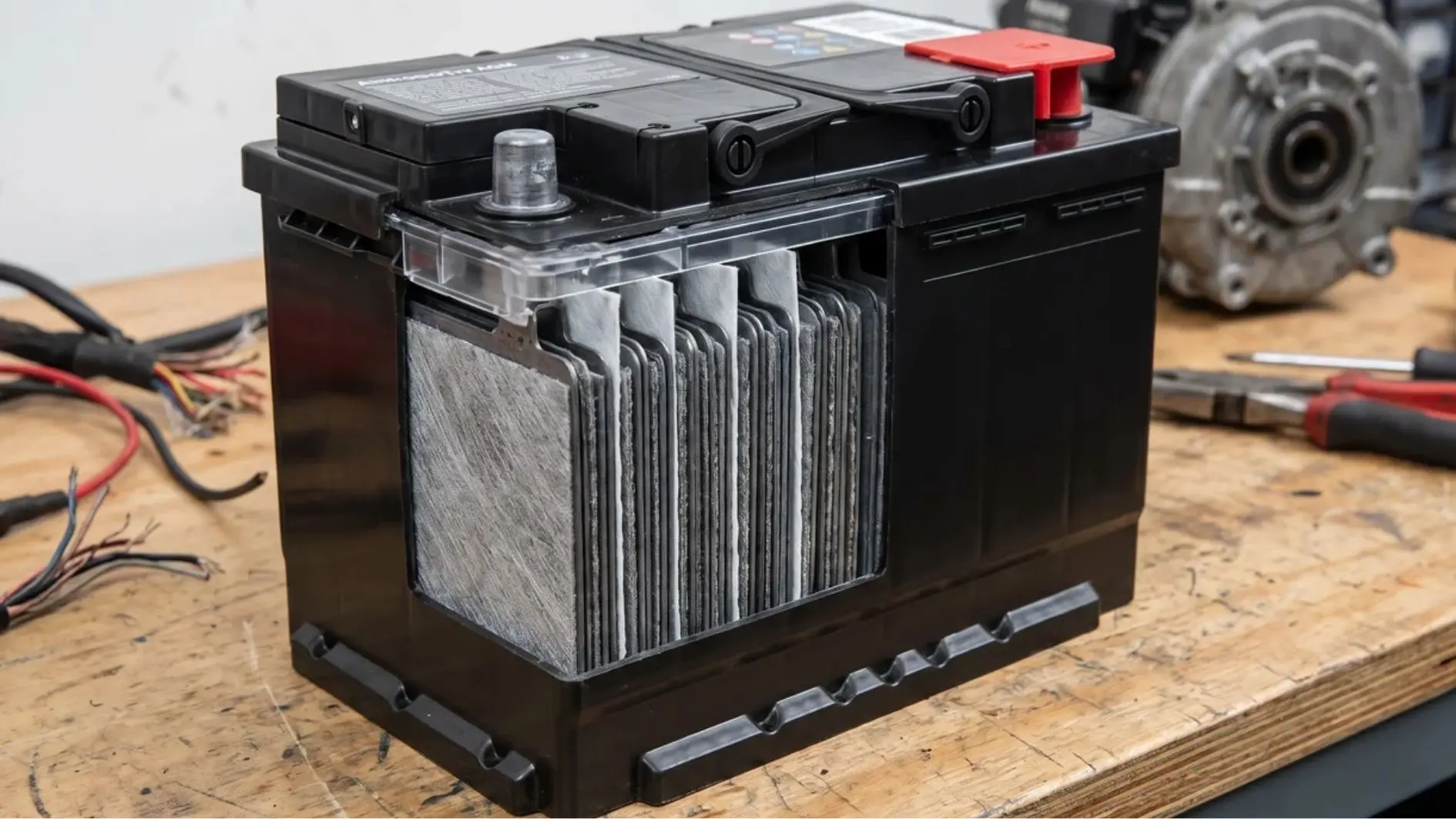
So, what is an AGM battery, and how is it different from the standard battery you may already use? AGM stands for Absorbent Glass Mat, a design that holds the electrolyte inside compressed fiberglass separators.
This construction affects charging speed, vibration resistance, maintenance, and starting power.
You will also learn where AGM batteries work best, how they compare with flooded batteries, when switching types is safe, and why the correct charger matters.
What Is an AGM Battery?
AGM stands for Absorbent Glass Mat, a name that refers to the thin fiberglass separators placed between the battery’s lead plates.
These mats absorb and hold the sulfuric acid electrolyte, preventing it from moving freely inside the casing. This design makes the battery sealed, spill-resistant, maintenance-free, and better able to handle vibration than a conventional flooded battery.
AGM is not a separate battery chemistry; it is still a type of lead-acid battery that uses lead plates, sulfuric acid, and a standard 12-volt DC power system.
The main difference lies in how the electrolyte is stored and kept in close contact with the plates. This construction enables faster charging, higher power delivery, lower internal resistance, and reliable performance in demanding vehicle applications.
How an AGM Battery Works
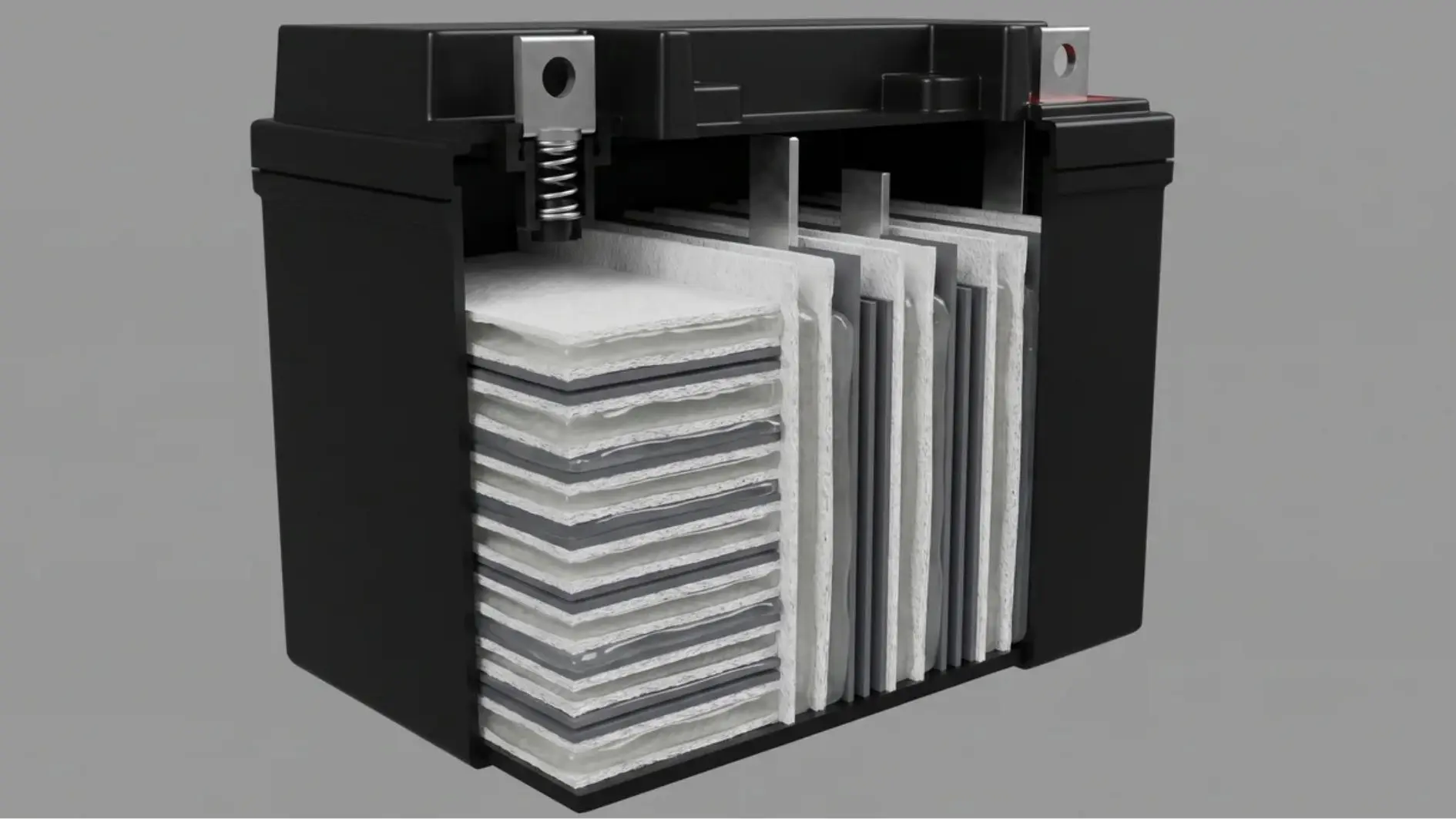
A conventional flooded battery contains free-flowing liquid electrolyte around its lead plates. An AGM battery uses fiberglass mats pressed closely between the plates and saturated with only the amount of electrolyte needed for the chemical reaction.
This arrangement is commonly described as a starved-electrolyte design. Because the acid remains absorbed in the mats, it cannot slosh around or spill during normal use.
The close contact between the electrolyte and plates also lowers internal resistance. Lower resistance allows the battery to supply high starting current and accept charge more efficiently than many standard flooded batteries.
1. Fiberglass Separators
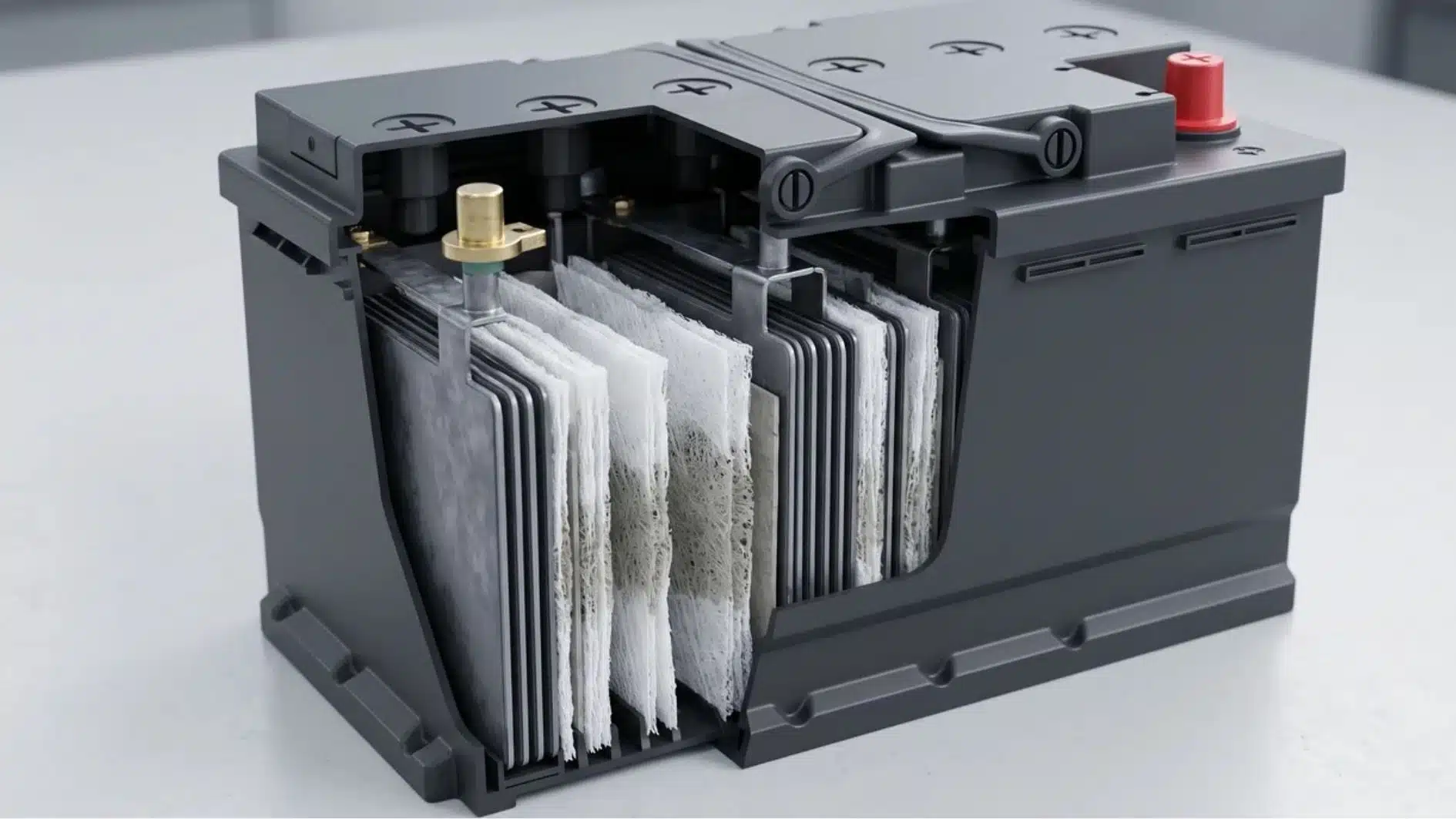
The fiberglass mat is not simply padding between the plates. It is a precision-made separator designed to absorb sulfuric acid while leaving a small amount of open space within its fibres.
That space allows oxygen produced during charging to move through the battery and recombine internally. This recombination process helps reduce water loss and allows the battery to remain sealed.
The mat is also compressed tightly against the lead plates. This compression helps prevent the plates from shifting or vibrating, which is particularly useful in motorcycles, boats, off-road vehicles, and other applications exposed to frequent movement.
2. Lead Plates
AGM batteries use lead-based plates similar to those found in flooded lead-acid batteries. The important difference is how consistently the electrolyte contacts those plates.
In a flooded battery, the plates remain submerged in liquid electrolyte. In an AGM battery, the saturated mat presses the electrolyte directly against the plate surfaces.
This close and consistent contact supports efficient chemical reactions and strong current delivery. It can also allow an AGM battery to provide substantial starting power without requiring a much larger physical case.
3. Pressure-Relief Valve
AGM batteries are valve-regulated rather than completely sealed. During normal charging, gases produced inside the battery recombine before significant pressure develops.
A pressure-relief valve opens only when internal pressure exceeds the battery’s safe operating level, typically due to excessive charging voltage or another fault.
The valve acts as a safety mechanism, not a routine vent. If it opens and electrolyte is lost, that fluid cannot be replaced because the battery has no removable fill caps. This is one reason AGM batteries require compatible charging equipment
Main Characteristics of AGM Batteries
The internal construction of an AGM battery produces several practical characteristics that distinguish it from a standard flooded battery.
- Sealed construction: The electrolyte remains absorbed within the fiberglass mats rather than flowing freely around the casing.
- No routine water top-ups: AGM batteries do not have removable caps and are designed to operate without requiring distilled water top-ups.
- Strong starting performance: Low internal resistance helps the battery deliver high current during engine start-up.
- Faster charge acceptance: AGM batteries can accept charge more quickly after repeated engine starts or periods of electrical use.
- High vibration resistance: Compressed mats help hold the internal plates securely and reduce movement-related damage.
- Low spill risk: Immobilized electrolyte makes AGM useful where leakage or movement could be a concern.
- Greater charging sensitivity: Excessive voltage can cause pressure buildup, electrolyte loss, and permanent battery damage.
These features make AGM valuable in demanding applications, but they do not automatically make it the best option for every vehicle.
AGM Battery vs. Standard Flooded Battery
Both AGM and standard flooded batteries use lead-acid chemistry. Their main differences come from electrolyte storage, internal construction, maintenance needs, charging behavior, and cycling ability.
These factors also influence how different backup power options handle repeated charging, electrical loads, and periods of stored use.
| Feature | AGM Battery | Standard Flooded Battery |
|---|---|---|
| Electrolyte | Absorbed in fiberglass mats | Free-flowing liquid |
| Battery casing | Sealed and valve-regulated | Usually vented |
| Maintenance | No water top-ups | Some models require water checks |
| Starting power | Strong current delivery | Suitable for standard starting needs |
| Recharge ability | Accepts charge efficiently | Generally recharges more slowly |
| Vibration resistance | High | Lower |
| Deep-discharge tolerance | Better suited to repeated cycling | Can degrade faster with deep discharge |
| Overcharging tolerance | More sensitive | Excess gases can vent more easily |
| Mounting flexibility | Suitable for more installation positions | Normally installed upright |
| Initial price | Higher | Lower |
AGM batteries generally cost more because of their internal design and performance characteristics. That additional cost can be worthwhile when the battery faces frequent starting cycles, heavy accessory loads, vibration, or irregular charging.
A standard flooded battery may still offer better value in a basic vehicle with modest electrical demands, provided the manufacturer does not specify an AGM battery.
Should You Choose an AGM or Standard Battery?
The correct choice depends less on which battery is described as “better” and more on what the vehicle or equipment requires.
Choose an AGM battery when the application involves:
- A start-stop engine system
- Frequent short journeys and repeated restarts
- High electrical accessory demand
- Strong vibration or movement
- Irregular charging
- Repeated partial discharging
- A sealed or restricted installation location
- Manufacturer requirements specifying AGM
A standard flooded battery may be sufficient when the vehicle has a conventional starting system, limited electrical accessories, predictable driving patterns, and no manufacturer requirement for AGM technology.
The existing battery label and vehicle owner’s manual should be checked before making a replacement decision. Battery size alone does not confirm that two batteries are functionally interchangeable.
Common AGM Battery Applications
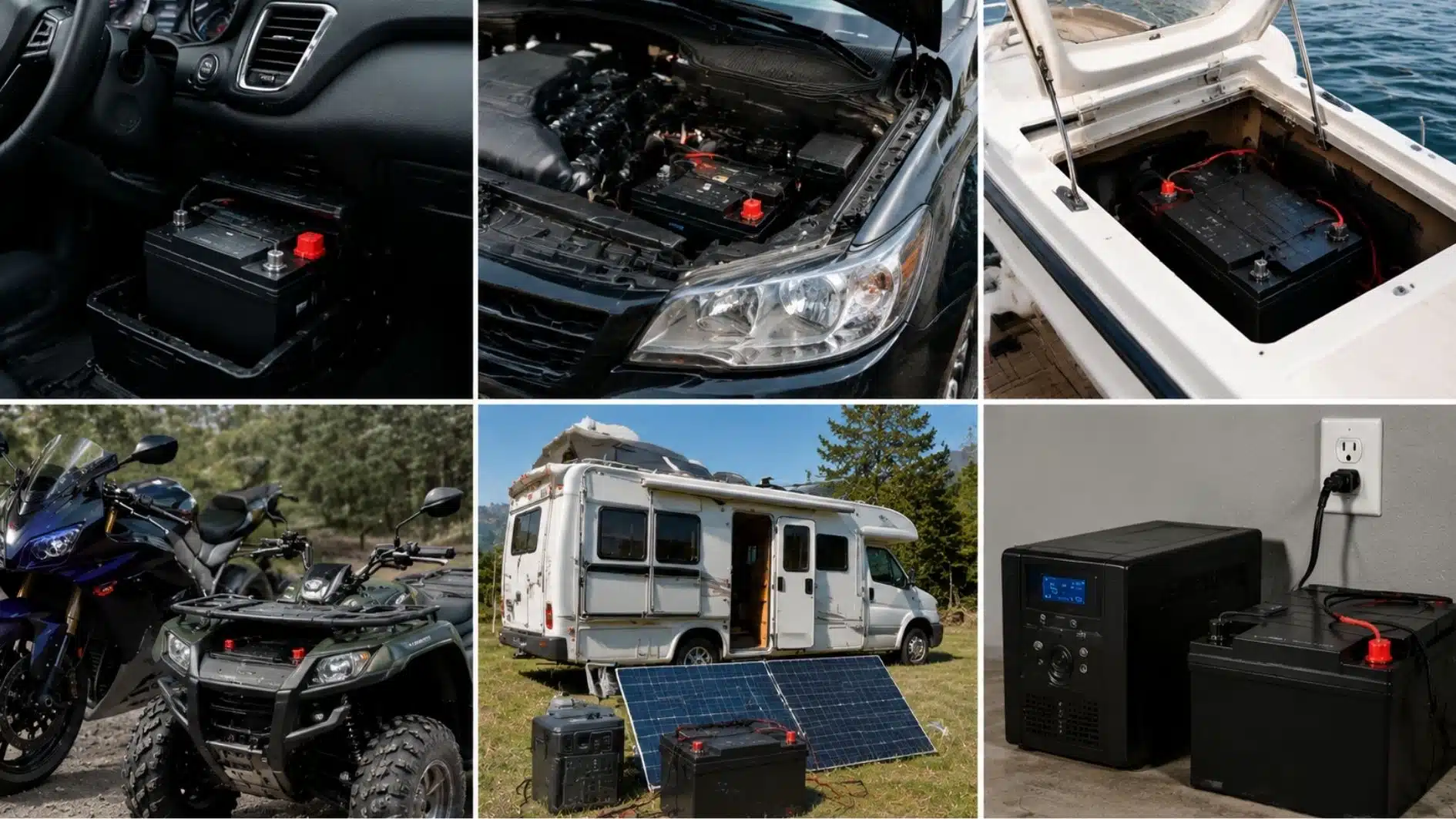
AGM batteries perform best in situations that place greater demands on charging, cycling, vibration resistance, or installation safety.
1. Start-Stop Vehicles
Start-stop vehicles repeatedly switch the engine off while stationary and restart it when the driver moves again. This can create dozens of additional starting cycles during a single journey.
AGM batteries are designed to recover charge quickly and tolerate repeated cycling more effectively than conventional starting batteries. When a vehicle was originally fitted with AGM, replacing it with a basic flooded battery may not provide the same level of performance.
2. Vehicles With High Electrical Loads
Modern vehicles may power heated seats, navigation systems, cameras, entertainment systems, phone chargers, safety sensors, and other electronics while the engine is running or temporarily switched off.
AGM batteries can support these changing electrical demands while maintaining enough power for reliable engine starting.
3. Marine and Boat Applications
Boats experience movement, vibration, irregular charging, and periods of storage. A battery containing free-flowing acid may also present a greater spill concern when the hull rocks or tilts.
AGM construction helps keep the electrolyte immobilized and the internal plates secure, making it suitable for many marine starting and auxiliary-power applications.
4. Motorcycles, ATVs and Powersports Equipment
Motorcycles, all-terrain vehicles, and similar machines regularly face vibration, sharp movement, and limited installation space.
The compressed fiberglass mats inside an AGM battery reduce plate movement and allow the battery to function without removable liquid-fill caps.
5. Recreational Vehicles and Off-Grid Systems
RV and off-grid batteries may receive power from alternators, solar panels, generators, or chargers at different times. They may also spend extended periods below a full charge.
AGM batteries can accept charge efficiently and tolerate repeated use better than ordinary starting batteries, although the correct battery type and capacity must still be chosen for the intended load.
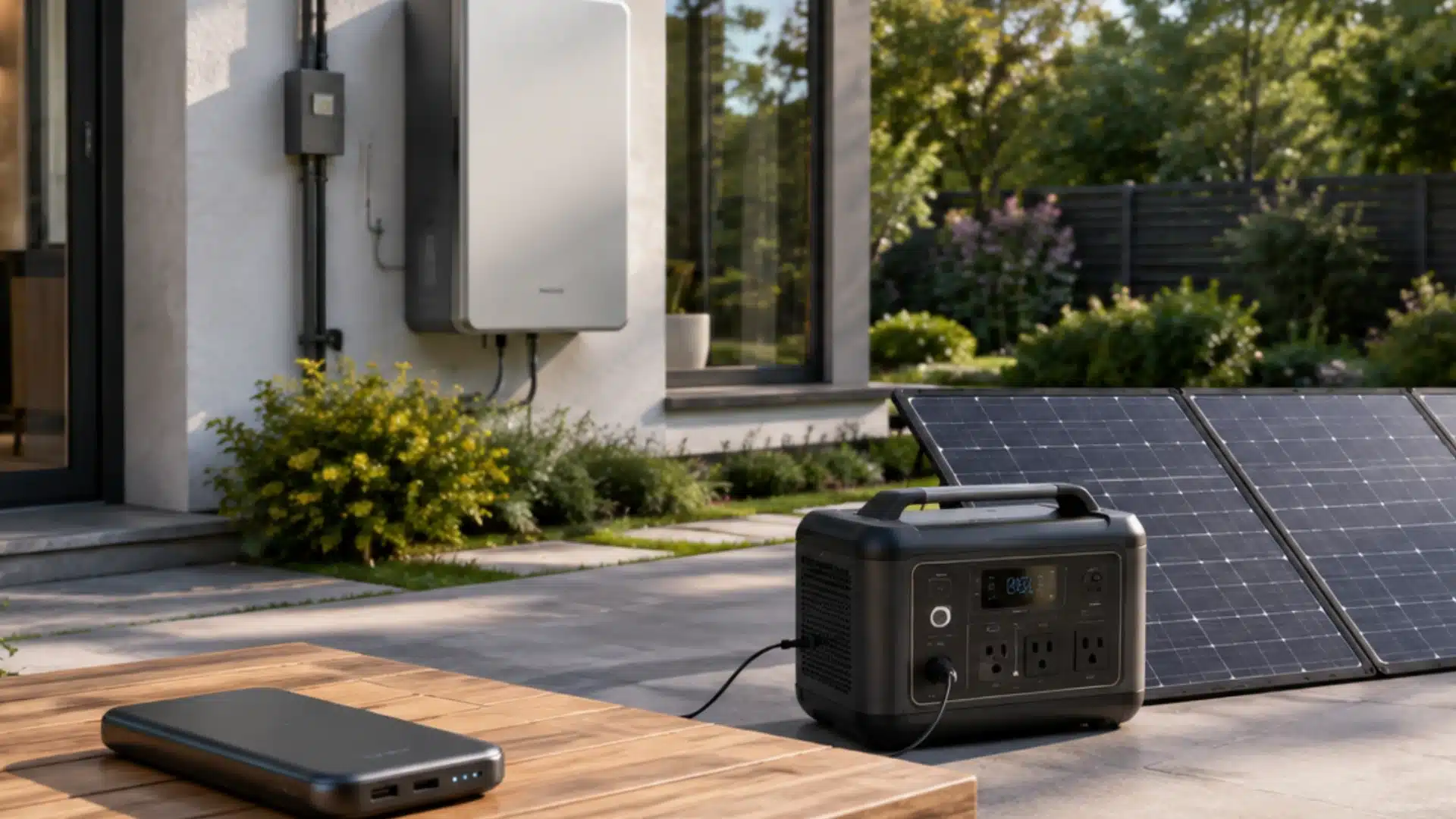
6. Backup Power Systems
Backup batteries often remain unused for long periods and then need to deliver power immediately during an outage.
AGM batteries are commonly used in backup systems because they are sealed, require little routine maintenance, and can remain connected to a suitable float charger.
Advantages and Disadvantages of AGM Batteries
AGM batteries offer strong performance in demanding applications, but their higher cost and charging sensitivity mean they are not ideal for every vehicle.
| Advantages | Disadvantages |
|---|---|
| Delivers strong starting current | Costs more than a standard flooded battery |
| Recharges efficiently after repeated starts | Can be damaged by excessive charging voltage |
| Requires no water top-ups | Requires an AGM-compatible charger or charging system |
| Resists vibration and internal plate movement | Cannot be refilled after electrolyte loss |
| Reduces the risk of acid spills | May provide little benefit in low-demand vehicles |
| Handles repeated cycling more effectively | Correct physical size does not guarantee compatibility |
| Supports start-stop systems and electrical accessories | Improper replacement may cause charging or system faults |
| Works well in restricted mounting locations | Usually heavier than a comparable standard battery |
The extra cost is most worthwhile when the vehicle benefits from repeated cycling, fast charging, vibration resistance, or dependable accessory power.
How to Identify an AGM Battery
The simplest method is to inspect the battery label. AGM batteries are generally marked with terms such as:
- AGM
- Absorbent Glass Mat
- VRLA
- Valve-Regulated Lead-Acid
- Sealed lead-acid
An AGM battery normally has a sealed top without removable water-fill caps. However, a sealed appearance alone does not always confirm the battery type because other sealed lead-acid designs also exist.
The owner’s manual, manufacturer specifications, or a reliable battery finder can confirm which battery was originally installed and what replacement type is recommended.
Conclusion
An AGM battery earns its higher price through practical design differences, not simply its label. Its fiberglass separators hold the electrolyte securely, helping the battery resist vibration, recharge efficiently, and support repeated starting cycles without routine water top-ups.
However, that performance also brings greater sensitivity to overcharging and stricter compatibility requirements. Now that you understand what is an AGM battery, you can compare its benefits with a standard flooded model more confidently.
I recommend checking your vehicle manual, battery label, group size, electrical ratings, and charging system before making a replacement.
Choose AGM when the application genuinely needs its strengths, and use a compatible charger. Share your experience or read my related battery guides next.
Frequently Asked Questions
How Long Does an AGM Battery Usually Last?
AGM battery life depends on climate, charging habits, driving frequency, electrical demand, and discharge depth. Regular short trips, prolonged undercharging, extreme temperatures, and incorrect charging can shorten its lifespan significantly.
Can You Jump-Start an AGM Battery?
Yes, an AGM battery can usually be jump-started using the vehicle manufacturer’s recommended procedure. Connect the cables to the correct terminals or designated jump points and avoid reversing polarity, sparks, or repeated starting attempts.
Does a New AGM Battery Need to Be Registered?
Some modern vehicles require battery registration or coding after replacement. This process informs the battery-management system about the new battery’s type and capacity so it can adjust the charging strategy correctly.
Can an AGM Battery Be Mounted Sideways?
Many AGM batteries can operate on their side because the electrolyte is absorbed rather than free-flowing. However, mounting rules vary by manufacturer, and installation upside down is generally discouraged. Always follow the product instructions.
Can Cold Weather Damage an AGM Battery?
Cold weather reduces available starting power, especially when the battery is partly discharged. A deeply discharged battery is also more vulnerable to freezing, so maintaining a full charge is important during long winter storage.
How Should an AGM Battery Be Stored?
Store it fully charged in a cool, dry, ventilated location away from heat and direct sunlight. Check its charge periodically and use an AGM-compatible maintainer when long-term storage could allow the voltage to fall.
Can a Multimeter Confirm That an AGM Battery Is Healthy?
A multimeter can show resting voltage, but voltage alone does not confirm capacity or starting ability. A proper conductance or load test provides a clearer assessment of the battery’s overall condition.
What Are the Common Signs of a Failing AGM Battery?
Possible signs include slow engine cranking, repeated start-stop faults, dim electronics, frequent charging needs, dashboard battery warnings, swelling, or an inability to hold a charge after the vehicle has been parked.